
Challenges and Recognition of Pain in our Feline Family Members
Studies suggest that as many as 90% of cats have radiographic evidence of degenerative joint disease. However, due to their small size and innate ability to compensate and adjust, as well as the typical lifestyle of a pet cat; lameness, pain and exercise intolerance are often not common owner complaints. Even when eliciting pain during a clinical examination, it can be difficult or unreliable to detect because pain-free cats can change their behavior as a result of fear. Cats that are highly stressed and/or are in pain may be depressed, immobile ,trying to hide, and often are not keen for human interaction. However, it is still possible to pick up the subtle cues of pain to differentiate stress from pain by looking atspecific postures and signs of other underlying conditions affecting overall physical health and body condition. In addition, home consultations can be valuable in removing the fearful stimuli and observing cats in their comfortable environments.
There is no standard, one-size-fits-all list of symptoms when it comes to signs of pain in a cat. The biggest indication is a CHANGE in behavior. In order to recognize a change, we need to be knowledgable as to what the “baseline,” “normal,” or “content” behavior looks like. For that reason you, the family and guardian of this feline family member will be the best resource and asset for the veterinary practitioner in determining if your cat is in pain.
The things to consider:
~ Does your cat display any new or deviated behaviors?
For example, a socially friendly cat is now hiding in the back of the closet. Alternatively, a cat that is usually more reclusive or solitary is no longer going off to hide when visitors show up, or follows you from room to room.
~ Does your cat adopt new postures? Postures while resting, urinating or even while walking? Examples: The “meatloaf” pose with all legs tucked under is something I routinely look for.
– Cats with abdominal pain often will adopt a sternal position with a lowered head, elbows drawn back, knees forward and muscles tensed. Their backs will be arched and their eyes are often squinted, as they ‘zone’ out.
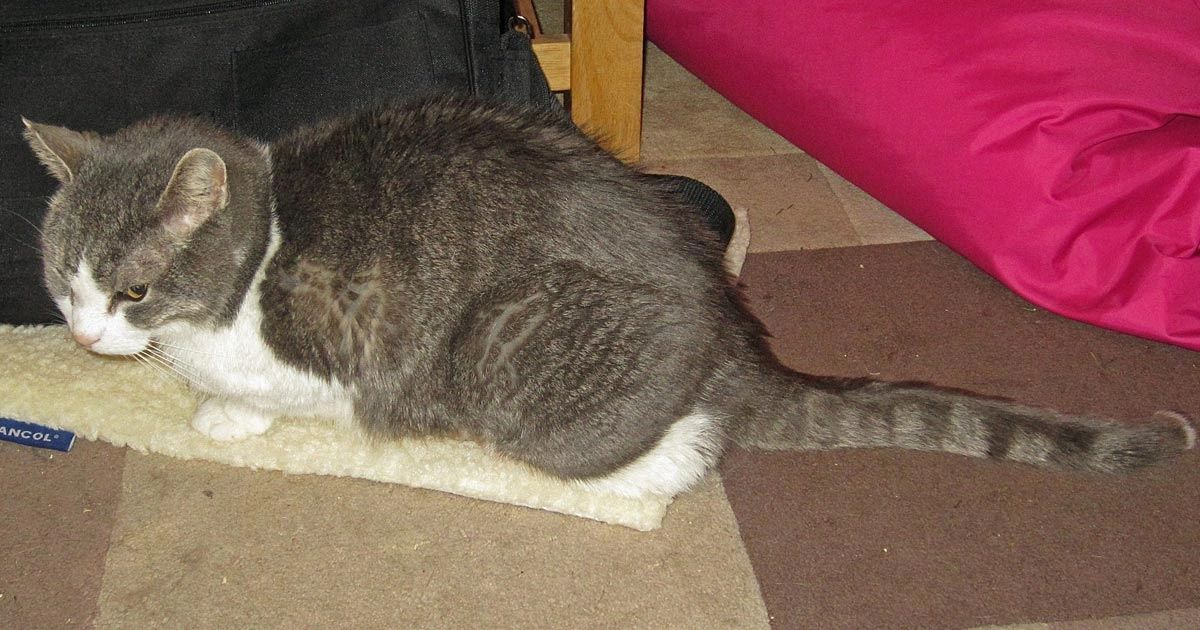
– Alternatively we may see a very painful cat laying on his side with back legs pulled up closer to the abdomen and alternating between flexing and extending ; facial expression will often show squinting; tense whiskers and jaw and lowered ears.
-A hunched lower stance with ankles closer to the ground may be observed while walking. Decreased grooming, not jumping on the same surfaces ” going vertical, may also be noticed.
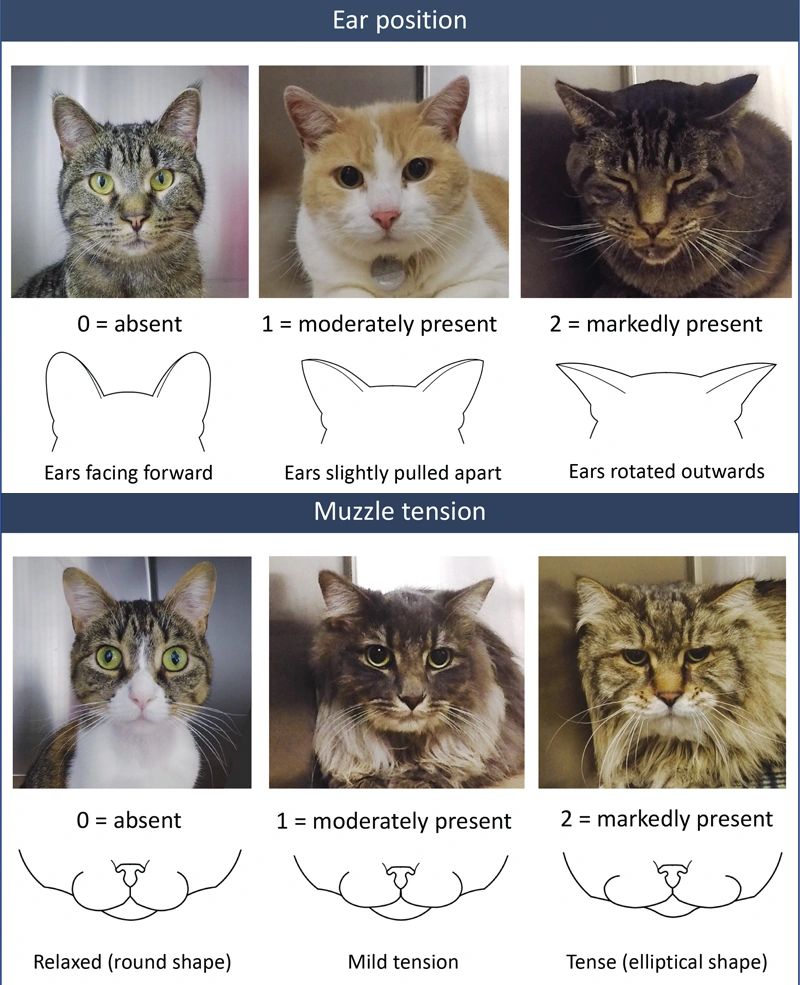
~ Changes in litter box usage and behavior. Soiling outside the litterbox due to difficulty getting over the lip/edge of the box.
~ Withdrawing from human interaction– such as showing sensitivity to being brushed or groomed.
~ Changes in eating habits may occur as they associate not feeling well with their food or if they underlying condition is causing nausea. Sometimes it seems that you find something your cat will readily eat only for her to show no interest a day later.
~ Changes in sleep, sleeping more, or sleeping a lot less. “Zoning out ” more than they are sleeping.
These are just a few observable behaviors which may help us determine if a cat is in pain. This information will allow us to develop a treatment plan to manage discomfort and boost quality of life. This information may determine when compassionate euthanasia is appropriate to prevent suffering.
Remember the first step of helping is recognizing, as you will always know your cat best. We are here to help.